
복음과 제자 시리즈 2 | Gospel & Disciple Series 2
"구원받은 자는 어떻게 사는가 | How Does a Rescued Person Live?"
How Does a Rescued Person Live?
The Privilege of Those Who Have Climbed
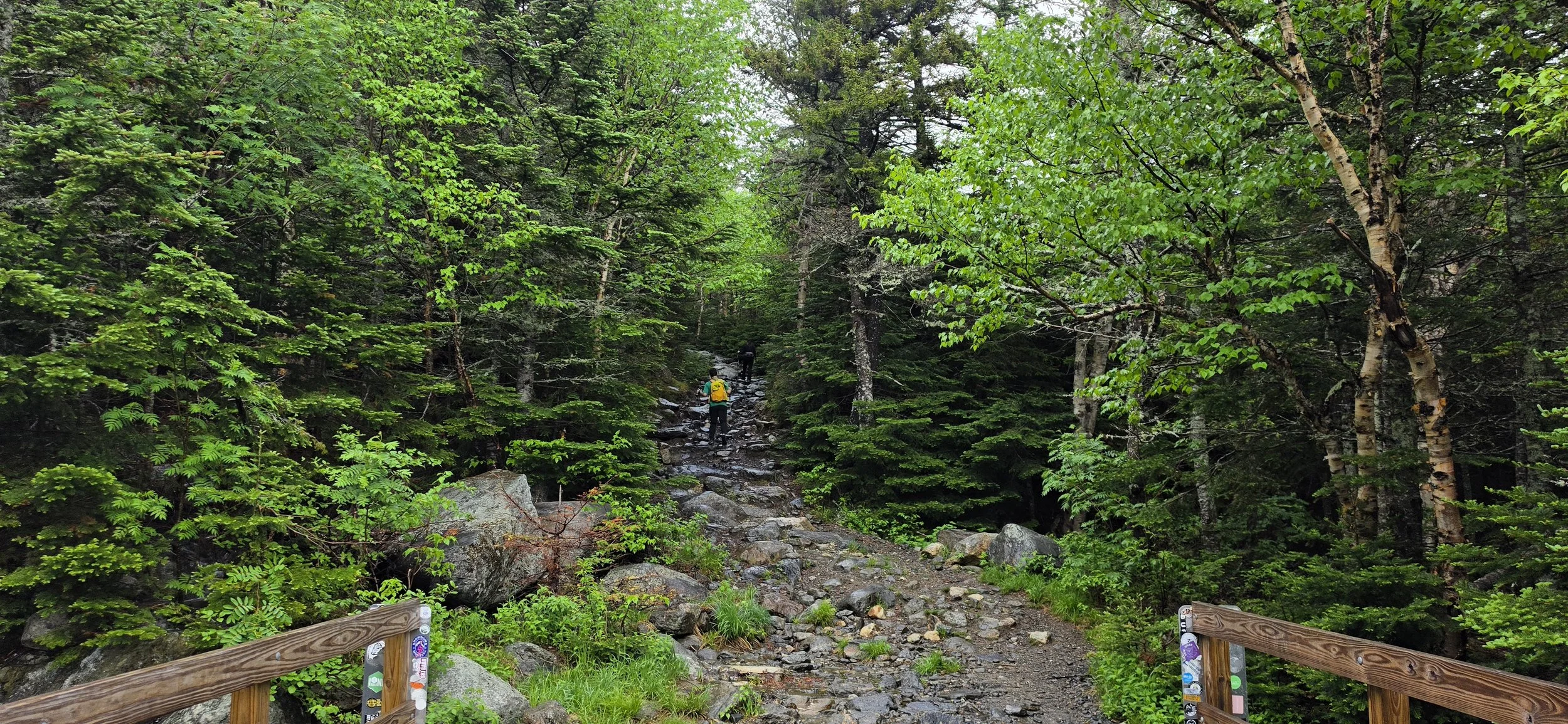
Last week, I climbed Mount Washington.
Two and a half hours up stone steps. It was hot. The whole way up, one thought kept coming back: "Why did I come up here in this heat?"
But on the way down, I discovered something I hadn't expected. The descent was far more dangerous than the climb. One wrong step and you slip. Injuries happen far more often going down than going up. So I found myself watching out for the people around me — checking on those ahead, looking back at those behind, taking each step carefully together.
That's when it hit me.


The privilege of those who have climbed is not a higher position.
It is this — you learn to live more carefully,
more attentively, with others in mind.
This is true in every area of life. As a parent. As someone who has grown older. As someone given a role in the church — intern shepherd, shepherd, pastor. The greatest thing a higher position can offer is not authority. It is the capacity to serve.
David understood this. In Psalm 18, he writes:
"Who is God besides the Lord? And who is the Rock except our God? It is God who arms me with strength and keeps my way secure. He makes my feet like the feet of a deer; he causes me to stand on the heights. He trains my hands for battle; my arms can bend a bow of bronze."
— Psalm 18:31–34 (NIV)
David did not climb. God placed him on the heights. And so David walked carefully — like a deer — watching, attending, protecting those around him.
Everyone who has met Jesus in the gospel has been placed on the heights. So the question before us today is this:
How does a rescued person live?
They know God. They make disciples. They love.
A Rescued Person Knows God
"Now this is eternal life: that they know you, the only true God, and Jesus Christ, whom you have sent."
— John 17:3 (NIV)
This verse comes from Jesus' prayer the night before the cross. In the middle of that prayer, Jesus defines eternal life — not as a place, not as a future destination, but as a relationship. Knowing God.
And this knowing is not the accumulation of information. It is soaking in. It is what happens when you spend so much time with someone that you begin to think like them, speak like them, become like them.
Someone once described it this way: holy imitation. What would Jesus do? What would Jesus say? Live that question long enough, and something begins to change. It becomes holy contagion. The life of Jesus starts to spread — from you, outward.
"Let us acknowledge the Lord; let us press on to acknowledge him. As surely as the sun rises, he will appear; he will come to us like the winter rain, like the spring rain that waters the earth."
— Hosea 6:3
Press on to know him. Not once. Not at a single moment of decision. Again and again, deeper and deeper.
The gospel is not a diving board.
The gospel is the whole pool.
Baptism is not the finish line. It is the starting line. Knowing God begins that day — and it never stops. Whether you are in Boston or Korea or anywhere else — the journey of knowing God continues wherever you are.
A Rescued Person Makes Disciples
"Therefore go and make disciples of all nations, baptizing them in the name of the Father and of the Son and of the Holy Spirit, and teaching them to obey everything I have commanded you."
— Matthew 28:19–20 (NIV)
Notice the word "therefore." There is a reason behind the command. Because you have been rescued. Because you have met the risen Lord. Therefore — go.
The privilege of those who have climbed is not looking down. It is going back to reach someone else. Remembering the path you came up — and standing beside someone who hasn't made it yet.
Boston is a remarkable city. People come here from all over the world — for degrees, for research, for new opportunities. Some of you will be here for one year. Some for several. And I want to ask you a question that goes beyond your program or your lab:
What if God sent you here?
Boston is not just a place to study.
It is a mission field where you have been sent.
God does not arrange the geography of our lives carelessly. The city you are in, the people around you, the season you are in — these are not accidents. They are assignments.
And making disciples here does not require a platform or a program. It begins with the simplest things:
- Eat together. Jesus made disciples around a table. Sharing a meal is where it starts.
- Invite someone to Mokjang. Bring one person into community. That is the most concrete first step.
- Study life together. Sit down with someone and open the Word. What you read together is different from what you read alone.
- Meet one-on-one, regularly. Consistency builds relationship. Relationship builds trust. Trust opens the door.
- Watch a shepherd live it out. Disciples are not made in classrooms. They are made by proximity — by watching someone live the life up close.
I have my own memory of this. Early in my faith, I went to someone and said, simply: "Do you want to study the Bible together? Do you want to worship together on campus?" It felt like a risk. I didn't know if they'd say yes. They did. And 40 years later, that person is still my closest friend. We still pray for each other.
The greatest mission field in Boston is not a distant country.
It is the person sitting next to you.
A Rescued Person Loves
"A new command I give you: Love one another. As I have loved you, so you must love one another. By this everyone will know that you are my disciples, if you love one another."
— John 13:34–35 (NIV)
Jesus calls this a new command. What's new is not the instruction to love — the Old Testament already said that. What's new is the standard. As I have loved you. First. Without condition. At personal cost.
And where does this love begin? It begins with time together.
If I had climbed Mount Washington alone, it would have been a hike. But I climbed with others. And when someone stumbled, we reached out. When someone needed to rest, we paused. When we reached the top, we breathed together. That shared time — that is love taking shape.
Love is not first a feeling. Love is first a decision to show up. To be present. To spend time. And over time, something grows.
And then it spreads. Holy contagion — beginning inside this community and moving outward into the world. Not through programs. Not through announcements. Through the visible reality of people who genuinely love each other.
"By this everyone will know that you are my disciples, if you love one another."
— John 13:35 (NIV)
Not by your doctrine. Not by your events. By your love.
Love is not a feeling to be discovered.
It is a practice to be learned,
and a gift to be received.
God Came First. Now It Is Our Turn.
Three passages. One sentence.
A rescued person knows God,
makes disciples,
and loves.
Those who have climbed come down more carefully. They watch the people around them. They slow down. They reach back. God placed you on the heights. Not so you could look down — but so you could see further, serve more faithfully, love more wisely.
Press on. Open the Word. Pray. Show up. The journey of knowing God is not a single moment — it is a lifelong soaking in.
Start with one person. One meal. One conversation. One invitation. God does not need your platform. He needs your willingness.
Give time. Show up. Begin with holy imitation and trust that it will become holy character. Love is a practice — and practice changes you.
Lord, do not let us merely be rescued — and stop there.
Let us be people who press on to know You — not just in knowledge, but in experience. Let us be people who take the first step toward one person this week. Let us be people who give time, again and again, until love becomes who we are.
God came first. Now it is our turn. Amen.
Hello, World!