
[Sermon notes / 설교노트 ]
“우리는 왜 여기 있는가? | Why Are We Here?”
예레미야 29:7 | Jeremiah 29:7 | May 31, 2026
Why Are We Here?
Look around this room for a moment.
Some of you have been walking with faith for years. Some of you are just beginning to explore what it means to believe. And some of you may not be sure why you're here at all today. That's okay. You don't need to have it figured out. Today's question isn't only a question of faith. It's a question every human being carries.
Why am I here?
The year is 597 BC.
Jerusalem has fallen. The young men of Israel are taken away. The brightest. The most promising. The ones with the most potential. Daniel is among them.
Babylon is the greatest city in the world at that time. The largest city on earth. Towering temples. Overwhelming culture. Absolute power. They had to learn a new language. They were given new names.
Daniel's Hebrew name meant: "God is my judge."
Babylon gives him a new name. Belteshazzar. "May Bel protect his life." Bel is Babylon's highest god.
To change someone's name is to make a declaration. Change the god you serve. Change who you are. Change your story.
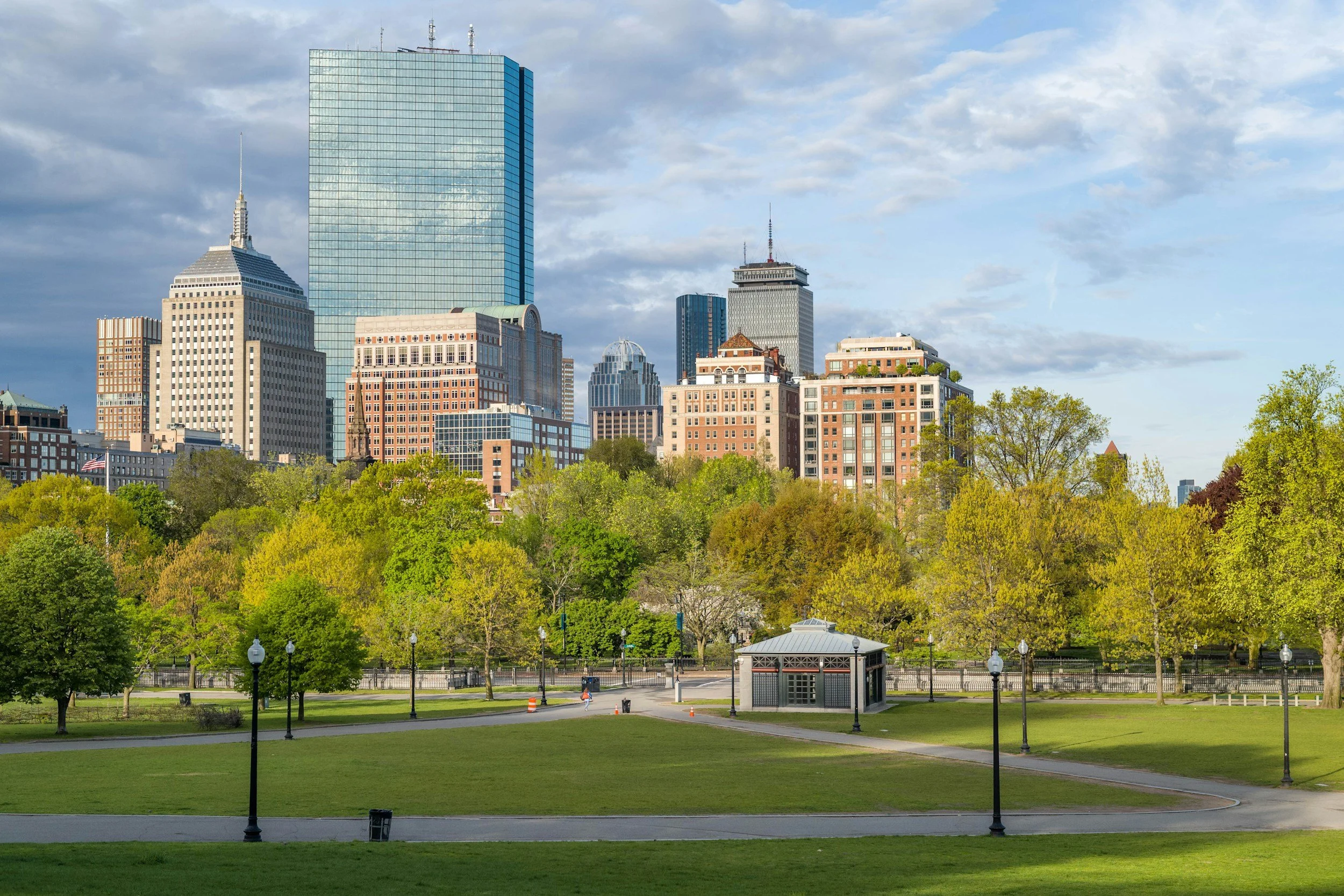
Babylon has always demanded this. Boston makes the same demand — just in a different language. Let success be your god. Let your career define your identity. Let your GPA determine your worth.
Is that all there is?
Let me ask you directly. Why are you in Boston?
You got on a plane. You packed your bags. You left family behind. You left friends behind. You left everything familiar behind. You speak in a language that isn't always yours. Your name doesn't always get pronounced right. The food is different. The culture is different. The winters are long.
You came to study. You came to do research. You came to work.
Is that all?
Now let's look at the whole Bible through the lens of Babylon. Babylon is not just a historical city. It runs through the entire story of Scripture.
The same land where the Tower of Babel was built — centuries later, Nebuchadnezzar builds his empire. The largest city in the world. Same place. Same spirit. The desire to make meaning without God — Babylon was its fullest expression. Daniel was taken there. And God was still at work there.
Babylon begins in Genesis and falls in Revelation. We are standing somewhere in between. Boston is one scene inside that story. And God is still speaking in the middle of it.
"Seek the welfare of the city."
WFC Boston exists in two forms. The gathered church — every Sunday. And the House Church — the Mokjang, meeting in homes throughout the week.
Both were not built by us. Both were bought with the blood of Jesus Christ.
Do not think of your Mokjang as a fellowship group. Do not think of it as simply a small group for community. It is a House Church bought with the blood of Christ. It is a place where Jesus is pleased to dwell. It is a place where His name is lifted high.
What is the most important thing in a Mokjang? Not the program. Not the number of people. Not the curriculum.
When God's presence is in a Mokjang — people who seemed unlikely to change, change. People who seemed unlikely to believe, believe. A joy that cannot be explained fills the room. We don't manufacture that. God does. We simply get to participate.
This connects directly to Babylon. Daniel and his friends were a Mokjang in Babylon. A small community. Their names were changed. Their culture was foreign. But God's presence was with them. In front of the furnace. At the mouth of the lion's den. God was with that small community.
Our Mokjang is no different. In some apartment in Boston. In some small room somewhere in this city. Jesus is there. That room is a beachhead of the Kingdom of God in the middle of our Babylon.
We are participating in something the Lord is building. That is not a small thing. That is a glorious invitation.
Paul calls himself a debtor. Because what he received was too enormous.
A debtor's life does not belong to themselves. It belongs to the one they owe. The gospel we received was not only for us. The moment we received it — we became debtors to those who haven't received it yet.
Our time. Our abilities. Our place in this city. All of it is owed — to the gospel.
Larry Osborne, in Thriving in Babylon, describes how Daniel lived. He did not curse Babylon. He lived with three postures.
Does Boston ever feel like everything? Does your dissertation feel like everything? Does your job search feel like everything? Daniel knew Babylon was not the whole story. We need to know that too. God's story is far bigger than Boston.
This is what it looks like to live as a debtor. Humble but convicted. Present in this moment but seeing the larger story.
Jeremiah 29:7 is a startling verse.
Not: leave Babylon. Not: conquer Babylon. Not: curse Babylon.
Seek the welfare of Babylon.
We are not leaving Boston. We are not trying to conquer Boston. We are seeking Boston's welfare. We are praying that this city flourishes. We are carrying the joy of heaven into this city.
The campus is your mission field. The lab is your mission field. The hallway of your dorm is your mission field. No one you meet is an accident. Every person is someone God has planted in your life. Seek their welfare.
Have you ever prayed for this city? Have you ever thought of Boston as a place you've been sent? Start today. Think of one person near you. Pray for their welfare this week.
This community is not trying to conquer you or anyone around you. We are people who seek the welfare of this city. We are glad you are here — whoever you are, wherever you're coming from.
We are not in Boston by accident.
As a community bought with blood — as debtors to the gospel — as people sent into the middle of this city — we are here on purpose.
When this service ends, we go back. Back to campus. Back to the lab. Back to work. Back home. That place is the mission field. You are already sent.
First — reclaim the identity of your Mokjang. It is a House Church bought with blood. Go back tonight as someone who knows that.
Second — live as a debtor to the gospel. Humble. Convicted. Eyes on the bigger story. What you have received is too great to simply hold onto.
Third — pray for one person this week. Is there a face coming to mind right now? That's the person. God has planted them in your life. Pray for them every day this week.
If you're still not sure what to do with all of this — that's okay. Take one question with you.
Why am I here?
That question is the beginning. Come back anytime. This door is open.